

When it comes to price action trading, understanding context isn’t just helpful — it’s essential.
Many traders fall into the habit of focusing only on individual candlestick patterns or isolated setups, believing that a textbook signal is enough to predict the next move.
But the reality is different: without reading the bigger picture — the structure, momentum, market condition, and interaction with key levels — even the strongest signal can fail miserably.
In this post, we’ll explore why context matters in price action trading and how developing this skill can improve your ability to read the market and make more informed decisions.
1. What “Context” Really Means in Price Action
Context is the invisible layer that gives meaning to everything you see on the chart.
Without it, setups are just shapes — disconnected and unreliable.
When we talk about context, we mean understanding:
- Whether the market is trending strongly or moving sideways,
- Where we are relative to key support and resistance zones,
- Whether volatility is expanding or contracting,
- What dominant forces (buyers or sellers) have been doing over the last several swings.
Context helps you evaluate whether a setup makes sense or is better avoided.
It’s the difference between taking a high-probability trade — or stepping into a trap without realizing it.
2. Why Patterns Without Context Often Fail
A beautiful bull reversal bar by itself is not a reason to buy.
A perfect wedge pattern doesn’t guarantee a reversal.
A clean breakout setup doesn’t always follow through.
Without context, these patterns lose their reliability.
For example:
- A bullish reversal bar in the middle of a strong bear trend?
– Probably a trap - A breakout bar formed at the dead center of a trading range?
– Very likely to fail and snap back - A wedge after minimal movement?
– May lack the exhaustion needed for a true reversal
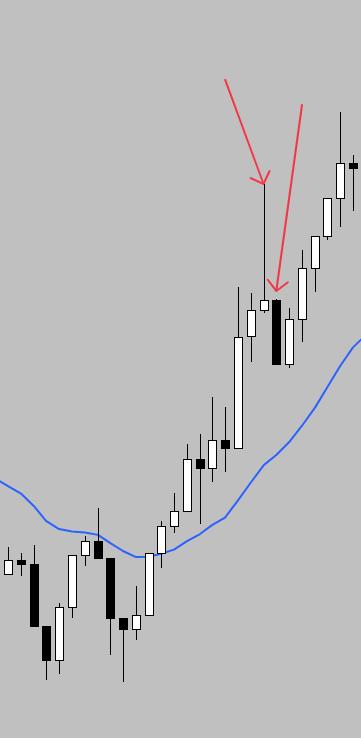
Bearish reversal bars in an uptrend context trap weak traders going against the trend
Patterns are only powerful when supported by the story the market is telling.
When you ignore the environment around a setup, you are effectively trading with a blindfold on.
Ignoring the context around a setup is like analyzing a sentence without reading the paragraph.
3. How to Read Context Like a Skilled Trader
Reading context is a skill you develop over time — but it can be approached methodically.
Here’s how to sharpen this skill:
Zoom Out First
Before getting caught up in the latest bar, step back.
Is the market in a strong trend? Are we near a major support or resistance level?
Starting from a higher timeframe helps you understand the market’s larger structure before zooming into finer details.
Identify the Dominant Pressure
Ask yourself: who’s been consistently winning — buyers or sellers?
Strong trends leave clear footprints: a series of higher highs and higher lows (for uptrends) or lower highs and lower lows (for downtrends).
Think in Sequences, Not Snapshots
Don’t fall into the trap of reading one bar at a time.
Look at the flow:
- Was there a trend break recently?
- Are pullbacks getting deeper?
- Are swings overlapping more?
This sequencing gives you a live narrative of how the battle between buyers and sellers is evolving.
That sequence tells you how the market is evolving.
Use Key Reference Points
Support and resistance levels, moving averages, prior swing points — these act like magnetic zones.
When a setup aligns with these areas, it’s far more likely to succeed.
4. Practical Example: Context Changes Everything
Imagine you spot a bull trend bar. Big body, small lower tail, closing near the highs — looks perfect. The natural instinct is to buy immediately.
But if you zoom out and realize:
- The market is in a strong bearish trend,
- We’re far from any meaningful support,
- The reversal comes after minimal selling exhaustion,
Then that “perfect” signal isn’t an invitation — it’s a trap.
Now imagine the same bar:
- After a multi-leg selloff (clear exhaustion),
- Forming near a significant support zone,
- Combined with a breakout failure below the prior low,
Now the context supports a true reversal — and the same pattern becomes a high-probability trade.
The pattern didn’t change — the context did.
And that changes how you interpret the setup.
5. Final Thoughts
In price action trading, context is not optional.
It’s the difference between guessing and reading.
Between chasing every signal and choosing the right ones.
The best setups emerge not because a pattern appears, but because that pattern fits naturally into the broader story the market is telling.
Slow down. Zoom out. Understand the setting before acting.
Because in price action, context is what gives meaning to the setups you see.
